3 July 2026
Reclaiming my attention
A personal reset on attention, technology, AI, social media, creativity, and building healthier boundaries with the devices I use every day.
Even though I now have AI doing things for me across different apps, services, and devices, my mind feels more scattered than ever. Part of that comes from the sheer volume of information reaching me every day. The rest comes from how many things I have decided are important, interesting, or simply worthy of my attention.
I want to take back some control. That means being clearer about what matters to me, noticing what keeps pulling me away from it, and changing how I use the technology around me.
What deserves my attention
Many things compete for my attention every day, but four areas of my life deserve to come first:
- My relationships with my girlfriend and friends
- Staying physically and mentally healthy
- Expressing my creativity
- Learning and personal development
Above all, I want to be a good boyfriend and friend. That should take priority over everything else. Yet I have become quite bad at responding to people I care about. Sometimes it takes me days. Sometimes I postpone a reply for so long that I forget about it entirely. I also delay making plans until it is too late. I want to do better.
I’m currently fitter than I have ever been, with several running races coming up over the next few months. I work out almost every day, but I am not thoughtful enough about which sessions actually support my goals. Training often is not the same as training consistently or intentionally.
My mental health may need the most attention. One of my biggest challenges with ADHD is feeling overwhelmed. Constant noise from every direction is a major source of that feeling, and I keep making it worse for myself. I love technology, but keeping up with everything happening across consumer tech, Apple, and AI is no longer realistic alongside the rest of my responsibilities.
I have also neglected mindfulness practices such as meditation and journaling. Instead of sitting with my thoughts and feelings, I keep my mind occupied with the latest news or another tool to try. I am concerned that I now leave too much of my thinking and decision-making to AI. What these tools can do is incredible, but their convenience also feels as though it is taking something away from me.
I think AI has also been slowly weakening my creative muscles. Tools like ChatGPT and Codex allow me to do things I could not have imagined a few years ago, but they can become a cheat code that I abuse. I no longer use AI only for the technical side of publishing this blog. I sometimes let it handle most of the writing and editing from a few loose notes.
In a work context, that can be reasonable, especially when I am producing content about industries in which I have little direct experience. My personal work is different. I should own most of its creative process and use AI where it genuinely helps. I want to draw a firmer line before that sense of ownership disappears.
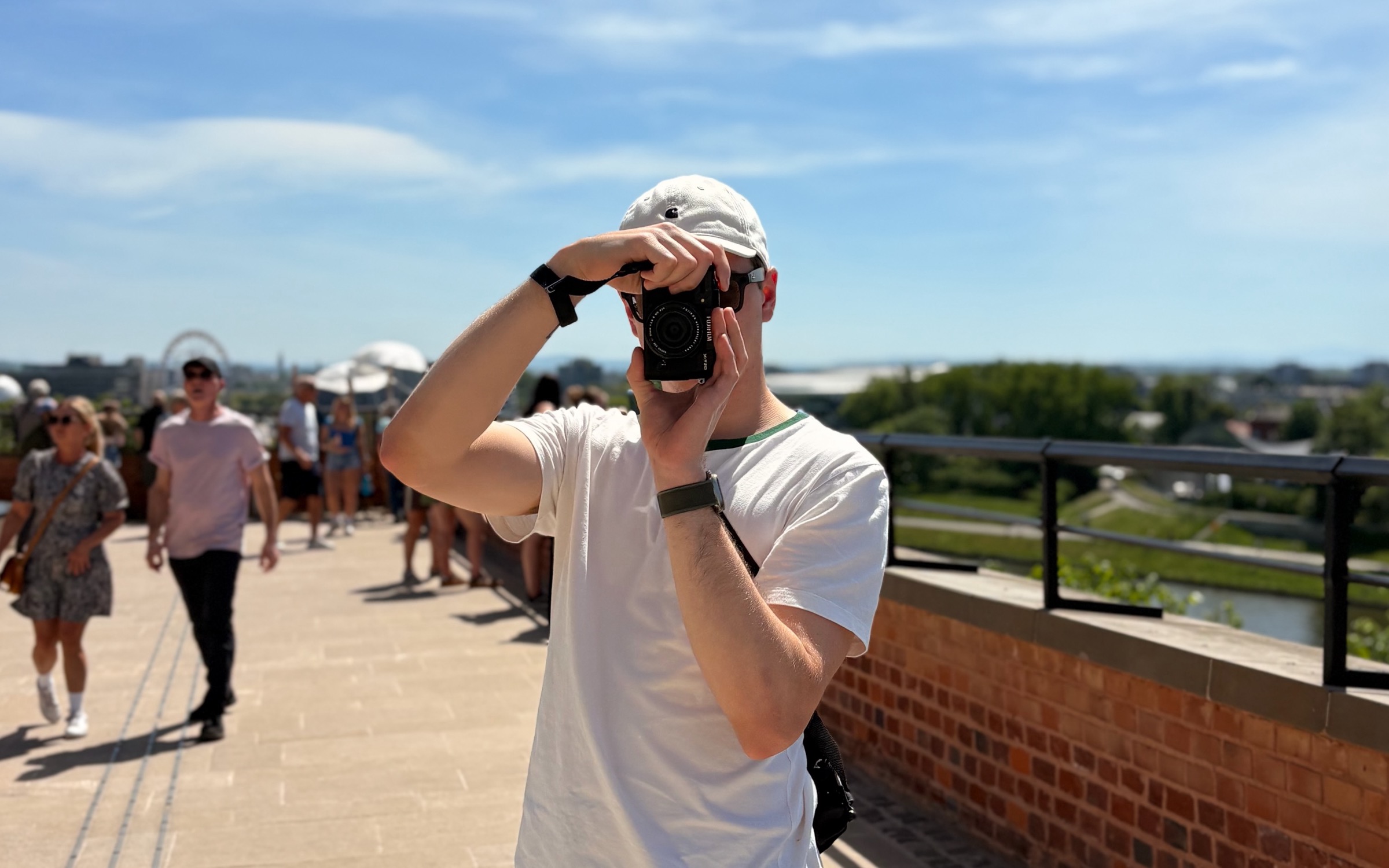
I also miss putting more care into photography. On paper, my iPhone has an incredible camera system, but I am rarely excited by the photos I take with it. I want to use the Halide camera app more and see whether it can bring back some of the joy I used to get from phone photography. I also need to reach for my FUJIFILM camera more often.
Starting university last September was the biggest shift in my life since I finished high school. Looking back on my first year at University College Cork, I believe I made the right choice both in returning to education and in choosing Business Information Systems. I am ready for new challenges and roles beyond marketing. The programme is preparing me for a technology industry being reshaped by AI, and I want to make the most of the knowledge and opportunities it gives me.
I also want to learn beyond the university curriculum and understand the work I may be doing in the future at a deeper level. This summer, I want to improve my Python and JavaScript skills and start learning TypeScript. That should make the next academic year easier and help me understand the output I get from Claude and Codex. I need to prioritise learning over jumping straight into execution, which is usually my instinct.
Beyond university and online courses, I want to read books again. I used to finish roughly one a month. My most recent book took me a year, even as my reading list kept growing.
What keeps taking it away
To give those priorities more room, I need to reduce the things that leave me overwhelmed every day:
- Social media
- News
- YouTube
- AI
- My devices
- What I call an “optimisation and performance mindset”
Like many people, I spend far more time on social media than I am willing to admit. Instagram is my biggest weakness. I tell myself that I keep it on my phone to stay connected with friends in Berlin and classmates in Cork. That is partly true, but most of my Instagram use is mindless scrolling that gives me little in return.
Trying to stay on top of the latest AI news made me get back on Twitter, as that’s where OpenAI, Anthropic, and other labs share the most detailed updates on new features being added to their apps and models. Again, I don’t feel like I get too much value out of it. Moreover, I feel like I’m trying way too hard to keep up with all of the tech news, which is really hard these days. I have been trying to keep it simple and stick to just catching up with my RSS feeds in the Reeder app, but even that feels too overwhelming these days.
I have also tried using Reeder to manage another weak spot: YouTube. I use the UnTrap for YouTube browser extension on all my devices to reduce the platform’s distractions, but it does not stop me from watching too many videos instead of working on something more important or learning something new.
AI is not inherently bad, but it is changing how I plan and create. I used to spend a lot of time researching places before a trip and putting together the perfect itinerary. Now, I can ask ChatGPT to handle the whole process and add the result to my Notion database. It is convenient, but I lose the part of planning that makes a trip feel personal. I want AI to support my research and creative process, not replace it.
The hardware adds another layer. I use an iPhone, Apple Watch, AirPods, two MacBook Pros, an iPad Pro, a Kindle, Ray-Ban Metas, and a camera. I do not carry all of them at once, but it is still a lot of technology.
Each device has a purpose, but I am not good at drawing boundaries between them, particularly my iPhone, iPad, and personal Mac. Each has distinct strengths. Giving them clearer roles could turn an overwhelming collection of devices into a more intentional working environment.
Finally, there is what I call my “optimisation and performance mindset”. Mindset is the best word I have for it because it is a pattern of behaviour rather than one specific habit, and it appears across my life.
At university, for example, I try to capture every piece of information available to me in a complex Notion dashboard. Maintaining that setup instead of using a simpler note-taking system says a lot about my urge to maximise efficiency. I do the same with fitness by monitoring several apps that summarise my performance data. I want to notice when optimisation is useful and when I am making life unnecessarily complicated.
What I am going to change
I know where my attention should go and the biggest obstacles that get in my way. Now, all I need is a clear action plan to help me reclaim my attention.
The first thing I want to prioritise is responding to people I care about. There are people in my life who are absolutely worth my attention, and I want to be better at being there for them. This is especially important now that I spend a lot of time away from Berlin while studying in Ireland. I don’t want distance to become an excuse for becoming passive in my relationships.
To help with that, I want to make my phone more of a communication device again. I already use Beeper to collect messages from places like LinkedIn and Facebook Messenger that I don’t check too often, and I want to add Instagram DMs there as well. Instagram is still useful to me as a way to stay in touch with people, but I don’t need the whole app on my phone just to reply to messages. If I can separate communication from consumption, that already feels like a meaningful step forward.
That means blocking or heavily limiting social media on my iPhone, especially Instagram. I find it far too easy to open the app for one innocent reason and then lose time scrolling through recommended posts, stories, and ads. It doesn’t make me feel more connected. It usually just makes me feel more distracted.
I also want to reduce how much time I spend on Twitter. I still think it can be useful for keeping up with AI and technology, but the pace of information there is overwhelming, and trying to keep up with everything happening in tech right now feels like a losing game. I don’t need to know every update the moment it happens.
The same applies to tech news more broadly. I have already set up an automated daily briefing using Codex and Notion workers, which sends a summary of relevant news to my inbox twice a day. That feels like a healthier model: instead of compulsively checking websites throughout the day, I can let the important things come to me at specific times. I want to block the websites I tend to check out of habit, especially when I know I’m not actually looking for anything specific.
I want to apply a similar idea to fitness. I already have a lot of useful data in Strava and Apple Health, and I have clear goals for upcoming running races in my Notion. Rather than obsessively checking different fitness apps, I want to build a simpler system that helps me stay on track with the kinds of workouts that actually serve my goals. The point is not to collect more data. The point is to train more intentionally.
Another big change I want to make is bringing more of my daily planning back to paper. Right now, my tasks and thoughts are scattered across Slack, Things, email, Notion, and random notes. These tools are useful, but they also make it too easy to keep jumping between contexts. I have a few Field Notes notebooks that I bought years back and never properly used. I want to start using them in a simple bullet journal style, not as another productivity system to optimise, but as a way to slow down and stay more present throughout the day.
When it comes to AI, I don’t want to stop using it. That would be unrealistic, and it would also be unnecessary. AI is incredibly useful to me. It helps me think through ideas, create small tools, prepare for university, build workflows, and work on projects that would have felt out of reach just a few years ago. I’m literally using AI right now by dictating my thoughts so that I can shape them into this article.
But I want to draw a clearer line between assistance and replacement. AI should help me express what I think, not decide what I think. It should help me build things, not take away the satisfaction of understanding how they work. This matters especially for writing. I still want my blog to sound like me. I still want to feel ownership over the ideas I publish there.
I also want to make more space for creativity. I consume a lot of information, and I probably always will. But I want to get better at turning what I consume into something of my own, even if it’s just a short blog post, a note, a photo, or a small project. I don’t want my attention to only flow inward. I want some of it to come back out into the world.
Photography is part of that too. I want to reach for my FUJIFILM X-T20 more often, try new film simulation recipes, and maybe get a new lens instead of convincing myself that I need a whole new camera. Cameras are expensive right now, and honestly, I still really like the one I have. I just need to use it more.
Learning is another area where I want to be more intentional. This summer, I want to take online courses in TypeScript and Flask, partly because I’m using AI to build small apps and utilities, and I want to understand the code better. TypeScript keeps coming up in the things I’m building, and Flask will be useful for my second year at university. I want to learn before jumping straight into execution, because that’s something I often do the other way around.
I also want to read books again. I have a long queue on Goodreads, and I miss the feeling of being properly absorbed in a book. Reading before bed, even for 30 minutes, feels like one of the simplest and most useful habits I could bring back. It would be a much better way to end the day than scrolling.
YouTube needs clearer boundaries too. Extensions like UnTrap for YouTube have helped me reduce some of the platform’s worst distractions, but they don’t solve the whole problem. I want to limit YouTube to my iPad and block it on the devices where it tends to become a distraction. If I’m going to watch something, I want it to feel intentional rather than automatic.
This connects to a bigger idea: each of my devices should have a clearer role.
- My iPhone should be for communication, personal productivity, navigation, payments, and quick tasks. It should not be my main consumption device.
- My iPad can be a more intentional device for consumption, reading, focused writing, and university work.
- My personal Mac should be for programming, learning, AI workflows, and anything that benefits from a proper file system and desktop environment.
- My work Mac should stay dedicated to work. That separation is useful, and I want to preserve it.
- My Apple Watch Ultra 2 should be mostly a fitness device. I already have most notifications turned off, but I want to go even further and make it feel more like a Garmin in spirit: useful, focused, and quiet.
I also want to bring back Focus modes across my Apple devices. Before going back to university, I want to set up clear modes for work, school, personal time, and maybe even intentional consumption. I don’t want every device to show me everything at all times. The same screen should feel different depending on what I’m trying to do.
Finally, I want to be more mindful about my tendency to optimise everything. There is something slightly ironic about writing an article about reclaiming my attention and ending it with a detailed action plan. But I think I need this kind of reset. The goal is not to create another complicated system that I can eventually abandon. The goal is to simplify.
I don’t want to become someone who rejects technology. I love technology, and I still believe it can make my life better. But I want to use it with more intention. I want my devices, apps, automations, and AI tools to support the life I actually care about: my relationships, my health, my creativity, and my learning.
That’s the point of reclaiming my attention. Not doing less for the sake of doing less, but making more room for the things that deserve more of me.